The Devil
The Devil says no — what you are pursuing may be driven by fear, addiction or unhealthy attachment.
Upright Meaning
The Devil confronts you with your shadows — the habits, beliefs and attachments that keep you in chains. Awareness is the first step toward freedom. What are you giving your power away to?
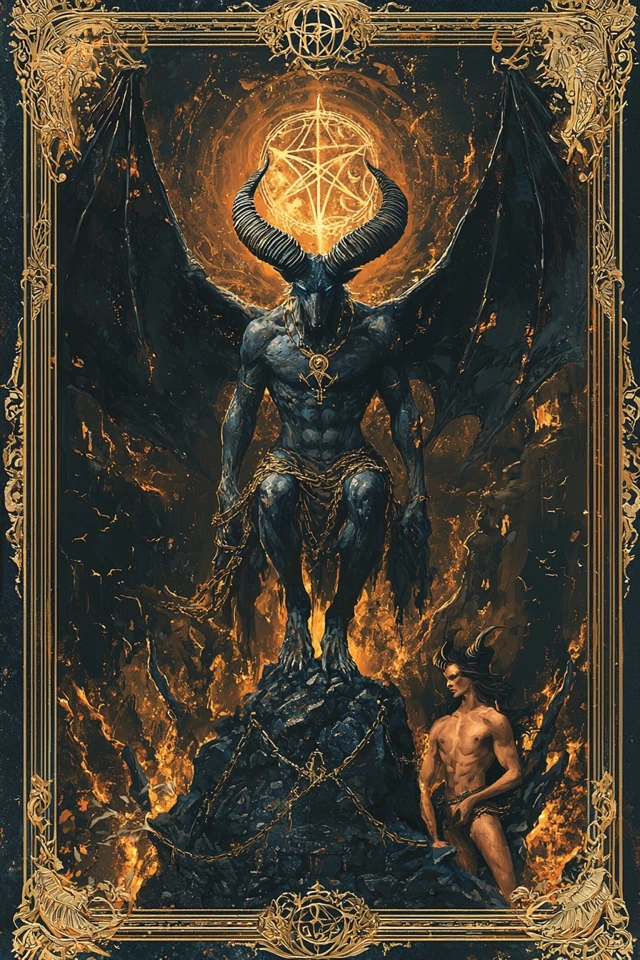
The Devil card is the tarot's most psychologically illuminating image — and arguably its most important for self-examination. The Baphomet figure presides over two chained figures, but look closely at the Rider-Waite image: the chains around the couple's necks are loose. They could remove them. They stay not because they must but because something about the captivity is serving them — comfort, familiarity, the numbing of some deeper pain. This is the card's central teaching: the most significant bondages in human life are chosen, maintained by the parts of us that prefer a known constraint to an unknown freedom. The Devil represents all forms of compulsion, addiction, and self-limitation that are sustained by a lie we tell ourselves about our own helplessness. When he appears, it is almost never to condemn but to illuminate: what are you staying chained to, and what story about yourself makes that staying seem necessary or inevitable?
Reversed Meaning
Full Reversed Page →You are breaking free from a pattern, addiction or toxic situation that has held you back. Reclaim your power — the chains were never as solid as they seemed.
The Devil reversed is one of the more hopeful reversals in the deck — it often signals a genuine awakening to a pattern that has held you captive, and the beginning of movement toward freedom. The chains are being noticed, perhaps for the first time with clear eyes. This is rarely comfortable; liberation from a pattern you've been unconsciously maintaining always involves the discomfort of honest reckoning with your own participation in it. The card can also indicate a pattern not yet released but beginning to weaken — addictions in early recovery, compulsions that are becoming conscious, relationships that are being examined more honestly. Less positively, the reversed Devil can sometimes signal a suppression of healthy instincts dressed up as liberation, or the exchange of one form of bondage for another.
Unhealthy attachment, obsession or a toxic dynamic in the relationship. True intimacy requires freedom, not control.
Greed, ego or a toxic work environment may be trapping you. Examine what you are sacrificing for material gain.
Confront your shadow — the parts of yourself you have denied or suppressed. Integration, not avoidance, brings wholeness.
The Devil in Love — Full Meaning
The Devil in love is the card of strong attachment — the magnetic, often physical pull that binds two people together in ways that can be intoxicating, generative, or quietly imprisoning depending on how consciously the bond is held. At its most affirmative, the card describes powerful chemistry, deep sensuality, and the kind of irresistible attraction that wakes up the body as well as the heart. It can mark the relationships where desire is unmissable and the appetite for one another remains genuinely alive. But the same energy that makes such bonds compelling can also tip into obsession, dependency, or patterns that feel impossible to step out of even when you know you should.
In a current relationship, The Devil often points to either a sustaining erotic charge that is one of the genuine strengths of the partnership, or to a dynamic in which one or both people have become entangled in patterns — jealousy, control, secrecy, substance use, financial enmeshment — that bind them more by chain than by choice. The card is asking you to look honestly at which version you are inhabiting. For someone single, it can describe a powerful chemistry with someone who is not necessarily good for you, or a recurring attraction type that you have begun to notice as a pattern rather than a coincidence.
The growth edge is consciousness within desire — the capacity to feel the pull fully without surrendering your judgement to it. Practise distinguishing between what is genuinely nourishing and what is merely compulsive. Notice the bonds you have agreed to without quite realising it. The chains in this card are notoriously loose; the figures could lift them off if they chose. Most attachments only feel inescapable until you remember you have not, in fact, been bound. Honour the heat. Refuse the helplessness. Real intimacy includes the freedom to leave, which is precisely what makes choosing to stay meaningful.
In love, The Devil reversed can signal the beginning of release from an unhealthy relationship pattern — codependency, toxic attraction, staying with someone for reasons that don't actually serve either person. There may be an awakening to how much your own fears and wounds have been driving relationship choices. The path forward involves genuine honesty about the role your own patterns play in the dynamics you find yourself in — compassionately and without self-flagellation.
Professionally, The Devil reversed can indicate the beginning of release from work arrangements that have been draining rather than sustaining — a toxic workplace culture, an exploitative dynamic, or a career driven by fear or compulsion rather than genuine motivation. There's an awakening to how much external factors have been controlling your professional life. The invitation is to move gradually toward work that is genuinely chosen rather than merely defaulted into.
Spiritually, The Devil reversed points to the early stages of shadow work — the process of making conscious what has been operating in the darkness. Becoming aware of your own compulsions, reactive patterns, and unconscious defences is not comfortable, but it is genuine spiritual progress. True freedom in the spiritual sense comes not from transcending the shadow but from honestly meeting it.
Frequently Asked Questions
The Devil card represents bondage, compulsion, addiction, and the specific lie that you have no power to change your situation. The crucial detail in the traditional imagery is that the chains binding the two figures are loose — they could remove them. This speaks to the card's core message: most of the significant limitations in human life are not imposed from outside but are unconsciously chosen and maintained from within. The Devil invites examination of what you're staying chained to — patterns, relationships, substances, beliefs about yourself — and the honest question of what that captivity is actually providing that makes you keep choosing it.
Upright, The Devil is generally a no — particularly for questions about whether a situation is healthy, whether a compulsive behaviour or pattern should be continued, or whether a tempting option is actually wise. He's asking you to look more carefully at what's driving the choice before committing. Reversed, the answer shifts toward a cautious yes, particularly for questions about whether it's possible to break a pattern, leave a limiting situation, or regain agency over something that has felt compulsive. He affirms that freedom is genuinely possible, though the work of achieving it is real.
In love, The Devil upright most commonly points to unhealthy patterns — compulsive attraction to people who aren't good for you, staying in a relationship for the wrong reasons, toxic or codependent dynamics, or a relationship in which one or both people are behaving in ways driven by fear, insecurity, or addiction. It's not a pleasant card to receive in a love reading, but it's a valuable one: it's asking you to examine what is actually happening in this connection beneath the surface of what you prefer to see. Reversed in love, it can indicate the beginning of genuine release from a destructive pattern.
The Devil in love describes powerful attachment — the magnetic, often physical pull that binds two people in ways that can be intoxicating or quietly imprisoning. At its best, the card signals strong chemistry, deep sensuality, and a genuine appetite for one another. At its more difficult edge, it points to obsession, dependency, jealousy, or patterns that feel impossible to step out of. The card asks you to look honestly at which version you are inhabiting. Real intimacy includes the freedom to leave — and the chains in this card are looser than they appear. The pull is real; the helplessness is optional.
The Devil can be a warning, though not always. Where the connection is genuinely nourishing and the desire is freely chosen, the card simply names a powerful bond and asks you to enjoy it consciously. Where the dynamic has tipped into obsession, secrecy, control, or compulsive patterns you cannot seem to break, the card is asking you to notice the cage you have agreed to. The warning is not about the intensity but about the loss of agency. If you would describe the connection as one you cannot leave even if you wanted to, the card is encouraging you to remember that you can.
For an existing relationship, The Devil typically describes either a sustaining erotic and emotional charge that is one of the partnership's genuine strengths, or a dynamic in which one or both people have become entangled in unhealthy patterns — jealousy, control, secrecy, financial enmeshment, or shared substance use. The card asks you to look without flinching at which version you are living. Where the bond is freely chosen, enjoy it; where it has become compulsive or diminishing, the work is to slowly reclaim agency. Couples who name the dynamic honestly often find they can transmute the heat without destroying it.
For dating, The Devil often describes a connection with strong physical chemistry that you should approach with both pleasure and discernment. The attraction is real and the heat is genuine, but the card invites you to keep your eyes open about whether the person is actually good for you over time. Notice whether the dynamic shows respect alongside desire, whether there is friendship beneath the chemistry, and whether you feel more like yourself or less in this person's company. The Devil is not a reason to refuse the connection — but it is a reason to date consciously rather than disappear into the magnetism.
Often appears with
Same element — Earth
More from the Major Arcana

The Fool's journey
Popular Combinations with The Devil
See how The Devil interacts with other major arcana cards in a reading.
The Devil with Minor Arcana
How The Devil interacts with Aces, court cards and key pip cards in a reading.