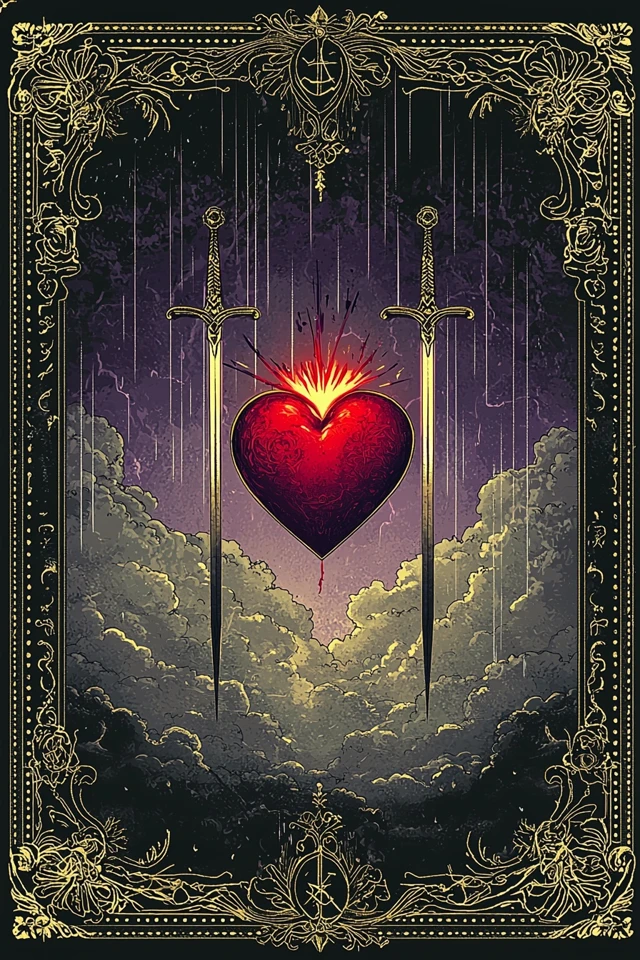
Three of Swords Yes or No
Swords · Air · heartbreak, grief, loss
Three of Swords says no — heartbreak, grief or painful truth are at the centre of this situation.
Heartbreak, betrayal or a painful separation that requires genuine grieving.
Disappointment, rejection or a painful professional setback.
Grief as a spiritual teacher. The open wound eventually becomes wisdom.
Why Three of Swords leans towards no
The Three of Swords speaks of heartbreak, sorrow and painful truths that cannot be avoided. This pain is real and valid — allow yourself to grieve fully. In time, the tears will cleanse and the heart will heal.
In a yes/no reading: Three of Swords advises caution or signals that now is not the right moment. This is not a permanent no — rather an invitation to reassess before moving forward.
The deeper yes/no signal
The Three of Swords is tarot's most unflinching image of heartbreak — three blades piercing a heart against a stormy sky. Yet the card's power lies not in pessimism but in its refusal to minimise pain. Grief, loss, betrayal, and disappointment are real experiences that deserve acknowledgement rather than spiritual bypass. The Three of Swords arrives to validate suffering that may have been dismissed or that you have been trying to dismiss in yourself. It speaks to the particular ache of something that cannot be undone: a relationship ended, a harsh truth spoken, a trust broken, a hope finally relinquished. But notice that the heart in the image is not destroyed — it is pierced, which is different. Pain leaves marks without necessarily ending capacity for feeling or connection. This card also sometimes appears when the grief is intellectual: realising that something you believed was false, that a plan will not work, or that a situation is not what you thought. All of these are genuine losses deserving genuine mourning.
Three of Swords Reversed — Yes or No?
Reversed, the Three of Swords signals a movement through grief rather than a deepening of it. The acute phase of pain is beginning to ease, the wound is slowly closing, and the first tentative steps toward healing are becoming possible. However, the reversal can also indicate that grief is being suppressed or prolonged unnecessarily — either by refusing to feel it at all (pushing through without processing) or by revisiting and rehearsing it long past the point of usefulness. It may point to someone clinging to the narrative of their hurt because releasing it feels like a betrayal of the experience, or because the pain has become part of their identity. The invitation of this reversal is to distinguish between honouring what you have been through and being held captive by it. Healing is not forgetting; it is integrating.
Three of Swords yes or no in love
The Three of Swords in love is the heartbreak card, and there is no comfortable way around that. It speaks to the kind of pain that comes from a relationship — a separation, a betrayal, a truth that arrived and changed everything, the slow recognition that someone you loved is not who you thought they were. The image is direct because the feeling is direct. The card is not predicting future pain so much as honouring pain that is real now, or grief that is finally being allowed into conscious view.
Frequently Asked Questions
Is Three of Swords a yes or no card?
Three of Swords is a no card. Three of Swords says no — heartbreak, grief or painful truth are at the centre of this situation.
What does Three of Swords mean reversed in a yes/no reading?
Reversed, Three of Swords shifts its energy. Reversed, the Three of Swords signals a movement through grief rather than a deepening of it. The acute phase of pain is beginning to ease, the wound is slowly closing, and the first tentative steps toward healing are becoming possible. However, the reversal can also indicate that grief is being suppressed or prolonged unnecessarily — either by refusing to feel it at all (pushing through without processing) or by revisiting and rehearsing it long past the point of usefulness. It may point to someone clinging to the narrative of their hurt because releasing it feels like a betrayal of the experience, or because the pain has become part of their identity. The invitation of this reversal is to distinguish between honouring what you have been through and being held captive by it. Healing is not forgetting; it is integrating.
Is Three of Swords a good card for love questions?
The Three of Swords in love is the heartbreak card, and there is no comfortable way around that. It speaks to the kind of pain that comes from a relationship — a separation, a betrayal, a truth that arrived and changed everything, the slow recognition that someone you loved is not who you thought they were. The image is direct because the feeling is direct. The card is not predicting future pain so much as honouring pain that is real now, or grief that is finally being allowed into conscious view.
What does Three of Swords say about career questions?
Disappointment, rejection or a painful professional setback.
Other No Cards
How to interpret yes/no tarot
In yes/no tarot, each card carries an inherent energy — some lean towards expansion and affirmation, others towards caution and blockage, and several sit in a liminal space of "not yet." Three of Swords leans towards no because of its core archetypal energy: heartbreak, grief, loss, painful truth, separation. When reading yes/no tarot, consider the card's upright energy as the primary signal, and allow your intuition to sense whether that energy feels amplified or muted in your current situation.