Ten of Swords
Ten of Swords says no — a painful ending is occurring, but dawn follows every darkest moment.
Upright Meaning
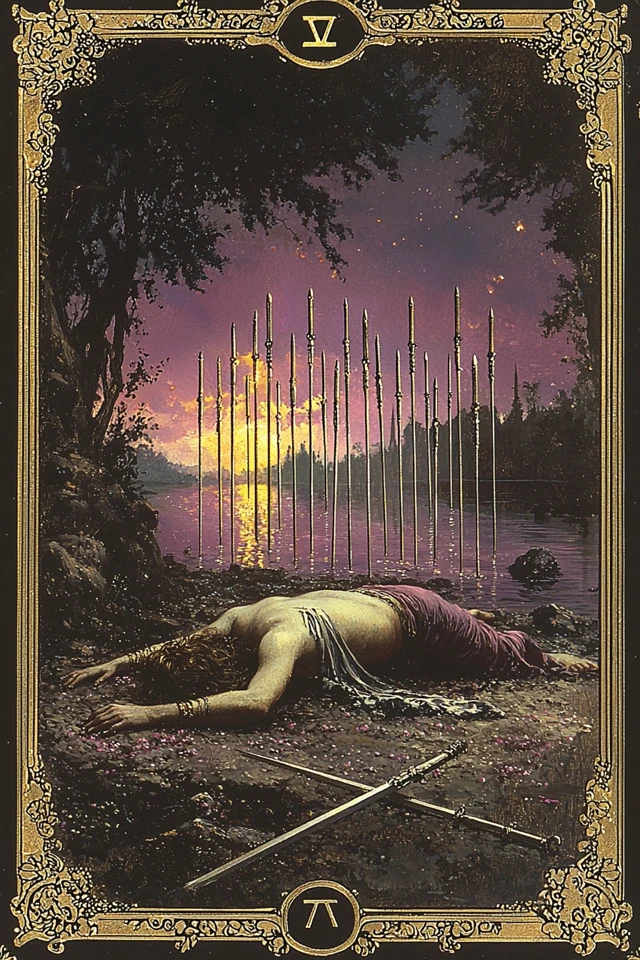
The Ten of Swords marks a painful ending — a crisis, betrayal or collapse that feels devastating. But notice: in the background, the sun is rising. The very worst is over. This ending, though painful, clears the way.
The Ten of Swords is tarot's most dramatic image of endings: a figure lying prone, ten swords in their back, against a dark sky beginning to lighten at the horizon. Its very extremity is instructive. This is not a subtle decline but a final, irrevocable conclusion — the kind where something cannot limp along any further and must genuinely end. In its stark way, the Ten of Swords brings a kind of relief: whatever has been dying has finally died, and the pretence that it could recover is over. There is a completeness to this card that is not possible in the earlier numbered swords, where pain is still in process. Here it has reached its terminus. The dawn at the horizon in many versions of the card is not incidental — it signals that the darkest point has already passed, that the ending, however brutal, makes space for something new that the prolonged dying could not. This card also sometimes signals being stabbed in the back — betrayal or a sudden, unexpected blow — but even then, what follows is clarity about where things actually stand.
Reversed Meaning
Full Reversed Page →A very slow or partial recovery, or resisting an ending that has already effectively occurred.
Reversed, the Ten of Swords suggests a process of recovery in the aftermath of a significant ending or blow. The acute phase is over; now comes the slow, unglamorous work of rebuilding. However, the reversal can also indicate a resistance to accepting that something is truly over — a refusal to let a situation reach its necessary conclusion, even when prolonging it only extends suffering. There may be a tendency to catastrophise: to experience difficulties as definitive endings when they are actually setbacks that can be recovered from. Conversely, if you have genuinely been through something terrible, the reversal is a gentle reminder that the rock bottom has been reached, the worst is behind you, and the direction — even if the progress is slow — is now upward.
A painful relationship ending or betrayal. The darkest moment before a new beginning.
Job loss, project failure or professional crisis. The rock bottom from which you can only rise.
Ego death. What falls away in the deepest darkness creates the space for spiritual rebirth.
Ten of Swords in Love — Full Meaning
The Ten of Swords in love is the rock bottom of an ending. It is not the looming threat of an end; it is the end having arrived, the worst already happened, the wound complete. There is a strange, severe relief in the image — the figure has fallen, the swords are in, there is nothing left to fear because the feared thing has already taken place. Whatever you were bracing for is over. The bracing itself can finally stop.
For many, this card marks a relationship that is undeniably finished. The denial has run out; the door has closed; the story is no longer salvageable on its old terms. Some readers will draw it during a relationship's final breakdown, others after a betrayal that cannot be unsaid or undone. The card does not promise the pain is small. It does, however, promise that you are at the floor rather than still falling, which is itself a kind of mercy.
The growth edge is the surrender that the card insists on. Fighting the ending — strategising returns, replaying conversations to find the loophole, treating the death of the relationship as a problem to solve — only prolongs the suffering. The dawn in the background of many versions of this card is the point. After full ending comes genuine renewal, but only if you stop trying to revive what is gone. Practical guidance: let yourself grieve without performance, take care of the body, lean on chosen people, and resist any urgent decision-making in the immediate aftermath. The path forward will become visible once you have stopped trying to walk backward. The Ten of Swords is severe, but it is also the card that promises this part is over.
In love, the reversed Ten of Swords often signals that a painful ending in a relationship is either being processed in its aftermath, or is being resisted past the point of usefulness. If a relationship has genuinely run its course, continuing to hold it in a state of suspended ending serves neither person. Conversely, if you are recovering from a painful breakup or betrayal, this reversal says that the very worst of the hurt has peaked and healing is beginning, even if it doesn't feel that way yet.
At work, a reversed Ten of Swords can indicate recovery from a significant professional setback — a redundancy, a project failure, a reputational blow. The card reversed says the lowest point has been reached. It can also caution against seeing a difficult professional situation as more terminal than it actually is: some defeats are genuinely recoverable, and catastrophising about them forecloses options that remain open. It is also worth examining whether a professional situation that should end is being artificially sustained.
Spiritually, the Ten of Swords reversed marks the transition from a dark night of the soul to something like the early light of dawn. The ego's certainties may have been thoroughly dismantled — beliefs, identities, and structures that felt permanent may have collapsed. The reversal suggests that this painful deconstruction is complete, and the quieter, more spacious inner life that can emerge from such endings is beginning to become possible.
Frequently Asked Questions
The Ten of Swords represents a definitive ending — the moment when something that has been struggling finally concludes, often painfully and with a sense of finality. It is the card of hitting rock bottom, of betrayal, of the sudden blow that makes continuation impossible. Despite its dramatic imagery, it carries a strange clarity: because this is the end, there is no more uncertainty about the direction things are headed. The worst has happened. And because it represents the lowest point, it implicitly signals that from here, the only possible movement is upward. The dawn breaking in many versions of the card makes this explicit: endings create the conditions for genuinely new beginnings.
It is among the more challenging cards in the deck, representing genuine pain, loss, and endings. However, its significance is not simply negative. The Ten of Swords marks a conclusion — and some conclusions, however painful, are necessary. A situation that has been declining slowly may be brought to a clear end by this card's energy, which at least ends the suffering of prolonged uncertainty. The dawn in the background of many depictions is a reminder that this is the lowest point of the cycle rather than a permanent state. In readings, the Ten of Swords is best understood as a card of necessary completion rather than unmitigated disaster.
When appearing in a future position, the Ten of Swords suggests that a significant ending or difficult conclusion is approaching. This might be the end of a relationship, a job, a chapter of life, or a belief system. The card counsels preparation rather than panic: knowing that something is coming to a close allows you to grieve its passing in advance, to extract what has been valuable from it, and to consider what you genuinely want the next beginning to look like. The future the Ten of Swords points toward is not simply loss — it is the clearing that comes after loss, which is where new growth becomes possible.
It marks the complete ending of a relationship, dynamic, or chapter — the bottom rather than the fall. The worst has already happened. The fear of losing this version of love is now the fact of having lost it. The card is severe but also strangely merciful: you are no longer bracing, no longer suspended, no longer suspended in the agony of not-knowing. Grief is real here, and the work is to let it move through you honestly rather than push it away. The card promises that after a true ending, genuine renewal becomes possible, but not before.
It is more an acknowledgement than a warning. By the time the Ten of Swords appears, the situation is usually already past the point where prevention is possible. The card is honest about that. Read it not as a threat of what might happen but as a clean confirmation of what is. The mercy in this card is the end of denial. You do not have to keep trying to save what has already left. Stop bracing and start grieving. The card is severe in its clarity, but it is also the card that ends the worst phase of suspended dread.
It often confirms an ending that is already in motion. The relationship is finished, the door has closed, the story cannot continue in its previous form. The card asks for surrender — not as defeat but as the willingness to stop fighting what is already over. Trying to revive the relationship from this place tends to deepen the wound rather than heal it. Allow the ending. Take care of the body. Lean on the people who love you outside the relationship. Resist big decisions for a little while. The renewal the card promises will form on its own once you stop trying to walk backward.
It describes the deepest part of the descent and, paradoxically, the turning point. You are at the bottom rather than still falling, which means the work of healing can actually begin. The card asks you to be honest about how bad it has been rather than minimise it for the comfort of others. Real grief, allowed fully, moves through faster than grief that is performed away. Take care of basic things — sleep, food, water, gentle movement, trusted people. The dawn is in the background of the card for a reason. After a complete ending, genuine renewal becomes possible, but the renewal cannot be hurried.
Often appears with

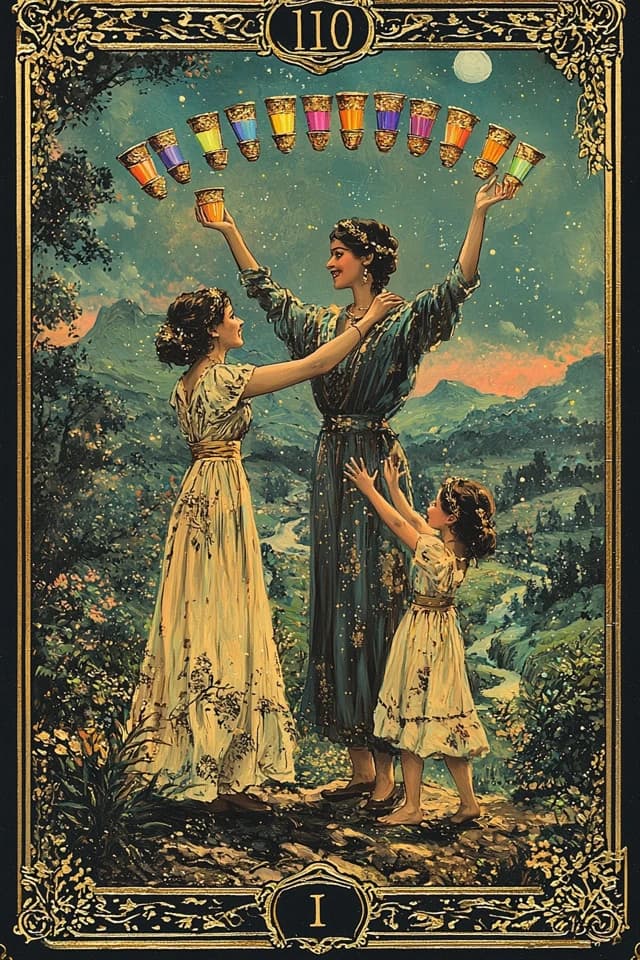
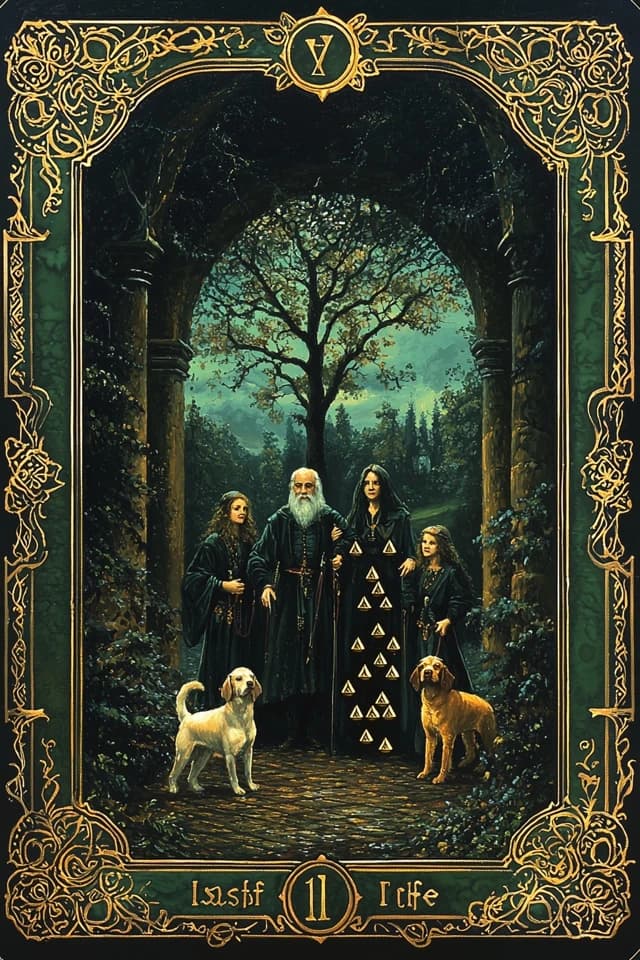
Other 10s — the same number, a different suit
Same element — Air


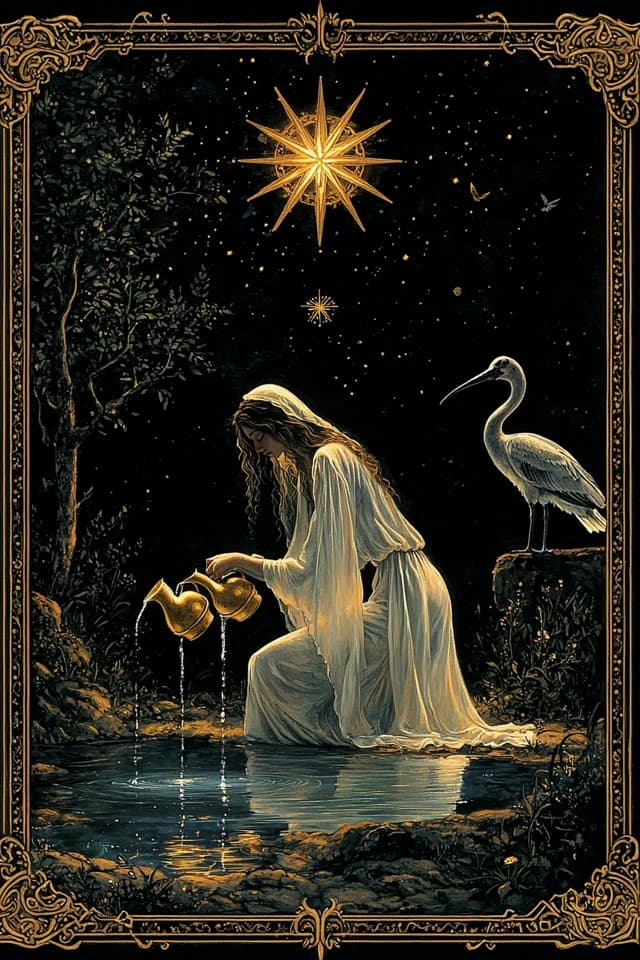
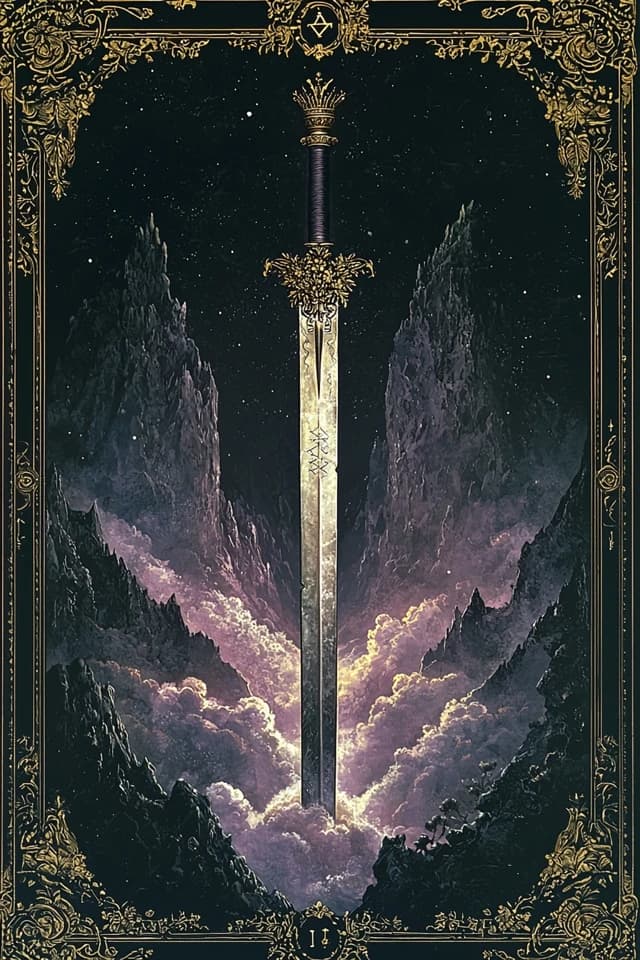
More from the Swords
Popular Combinations with Ten of Swords
See how Ten of Swords interacts with other major arcana cards in a reading.