Death
Death says no to what was — but yes to transformation. An ending is clearing space for essential renewal.
Upright Meaning
Death in tarot rarely means physical death — it heralds profound transformation. Something must end for something new to begin. This transition, though difficult, is deeply necessary and ultimately liberating.
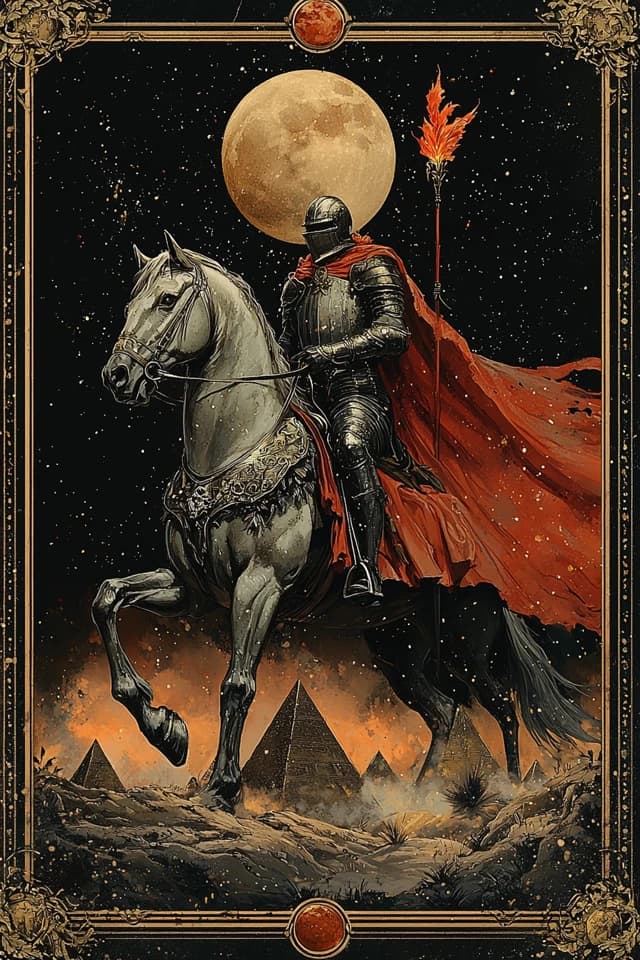
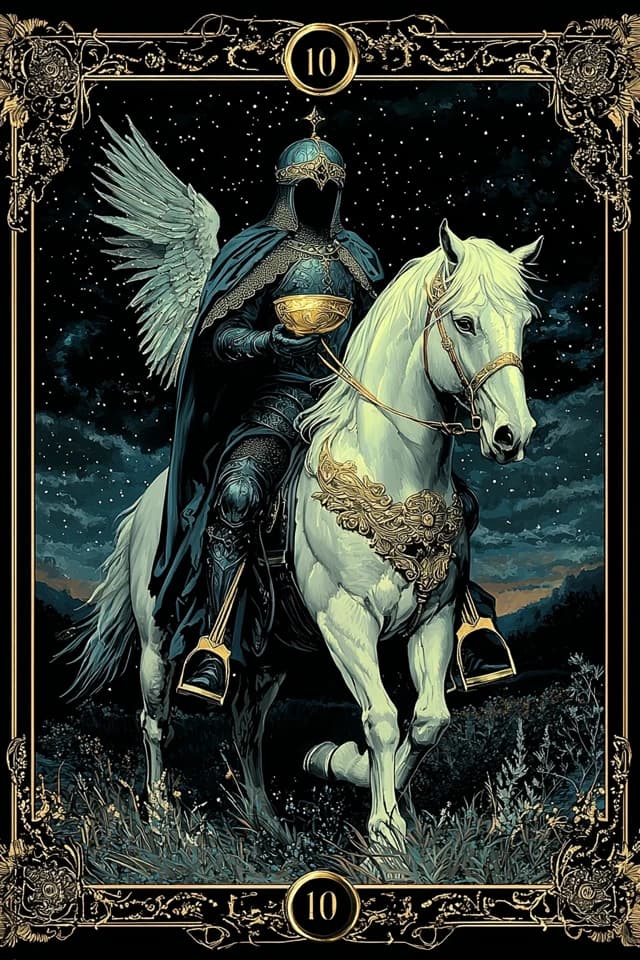
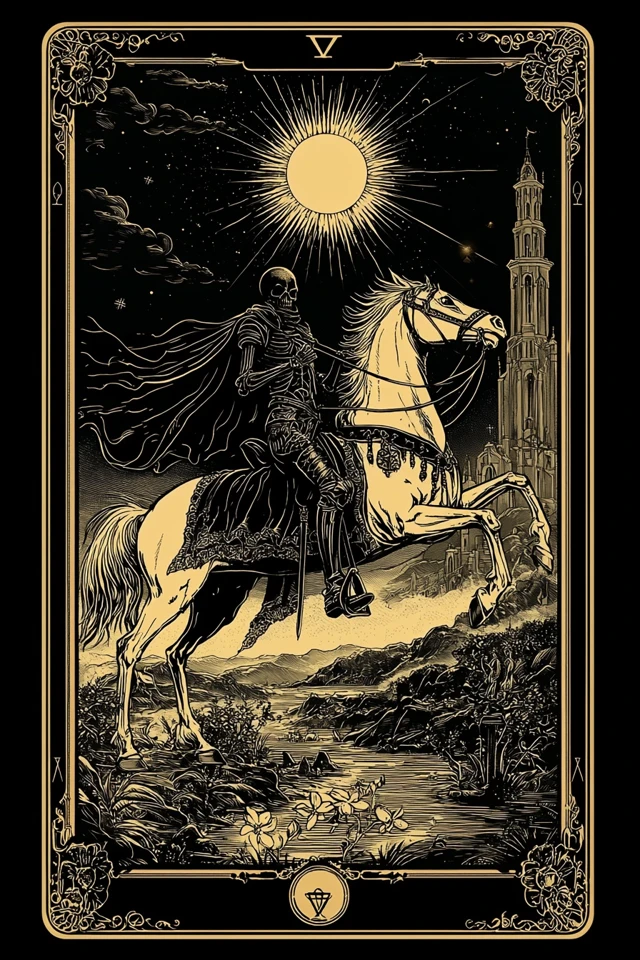
The Death card is the tarot's most misunderstood and, in many ways, its most philosophically rich card. It almost never indicates physical death — instead, it represents the principle of transformation through ending: the understanding that genuine renewal requires something to actually die first. The skeleton knight rides a white horse (purity of change, not threat) and before him, all human conditions are equal — king and child, bishop and maiden. This is the great leveller: no life remains untouched by endings. The deeper teaching is that we cannot receive what comes next if we haven't genuinely released what's past. Incomplete griefs, avoided endings, clinging to chapters that are finished — these create the stagnation that Death, at its healthiest, comes to dissolve. The card asks what you are ready to release completely, not merely in words but in genuine inner letting go.
Reversed Meaning
Full Reversed Page →You are resisting an inevitable ending and clinging to something that has already run its course. The longer you hold on, the more painful the eventual release will be.
Death reversed most commonly indicates resistance to a necessary ending — a clinging to something (a relationship, identity, belief, phase of life) that has genuinely run its course, refusing to acknowledge the ending that is already in progress. This resistance is rarely conscious; it often presents as hope that things will change back, or as a frantic redoubling of effort to resuscitate what is no longer alive. It can also indicate stagnation: an inability to move through a transition because the grief of the ending hasn't been genuinely processed. Sometimes the card reversed signals the opposite — a transformation that has been forced too quickly, without adequate grieving of what was lost. The message in either case is the same: real change requires genuine passage, not shortcuts or avoidance.
The end of one relationship chapter and the beginning of another. A relationship may conclude, or a significant transformation occurs within it.
A career, role or project is coming to an end. Clear the old to make way for a more authentic path.
Ego death and rebirth are core to the spiritual path. You are being called to shed old identity layers and emerge renewed.
Death in Love — Full Meaning
Death in love is one of the most misread cards in the deck. It is rarely about loss in the simple sense and almost always about transformation — the necessary ending of a chapter so that a truer one can begin. The card appears when a phase of your romantic life has reached its natural completion and continued effort to extend it would only postpone what is already underway. This might be a particular dynamic in a long partnership, an old way of relating, a fantasy that has run its course, or, occasionally, a relationship itself. Whatever is ending, Death asks you to let it end with dignity, because the space cleared by an honest ending is the precondition for genuine renewal.
In a current relationship, Death typically marks a profound shift rather than a breakup. A version of the connection is dying — perhaps the early, idealised one — and a more grounded, more honest version is being born. Couples who navigate this passage well often describe afterward that they feel as though they have entered a new relationship with the same person. For someone single, the card can describe the end of an identity that organised your love life: the wounded one, the perpetual seeker, the person defined by a past relationship. Once that identity loosens its grip, the love that becomes possible is qualitatively different.
The growth edge is your willingness to let go without yet knowing what replaces what has been released. Death does not show you the new chapter while you are still clutching the old one; the surrender comes first, the clarity second. Practise giving each ending the small ceremony it deserves rather than rushing past it. Notice what you are gripping out of fear of the empty space. The cards that follow Death in any spread are visible only because something has been cleared away. Trust the cycle. What is genuinely yours does not need to be held by force.
In love, Death reversed often signals a relationship that has effectively ended but hasn't been formally completed — both people remaining in the structure of connection while the actual living heart of it has already departed. Or it can indicate someone stuck in grief over a past relationship, unable to genuinely let go and therefore unable to be fully present to what might come next. Real transformation in love requires the courage to acknowledge when something is truly finished.
Professionally, Death reversed can point to staying in a role, career, or company well past the point where it was serving your genuine development — through fear of change, financial anxiety, or sheer habit. The chapter is complete; what you needed from this environment, you've received. Remaining now is costing you more than leaving would. It can also indicate resistance to change within an organisation — the refusal to adapt to genuinely new conditions because the old way feels safer.
Spiritually, Death reversed invites examination of old identities and beliefs you're still carrying that no longer reflect your actual understanding. Spiritual growth inevitably requires dying to previous versions of yourself — the beliefs that served you at one stage of life may become constraints in the next. The card asks what version of yourself you're holding on to that you've actually already outgrown.
Frequently Asked Questions
Despite its dramatic imagery, the Death card almost never indicates physical death in a reading. It is fundamentally a card of transformation through endings — the principle that genuine renewal requires something to genuinely conclude first. The skeleton on a white horse before whom all social conditions are equal represents the great leveller of change: no life remains in one form forever. As a card, Death asks what needs to end in your life so that something genuinely new can begin. It speaks to transitions, completions, letting go, and the courage required to close a chapter that is genuinely finished.
In yes/no readings, Death upright is typically a no to continuity but a yes to transformation. If you're asking "will things stay as they are?" — no. If you're asking "is this the right time to make a major change or let something go?" — possibly yes, particularly if that change has been building for some time. Reversed, Death tends to say no to the transformation being resisted: whatever ending you're trying to avoid is either not yet complete or is being made harder by your resistance to it. It suggests that facing and processing the ending will ultimately serve better than continued avoidance.
In love readings, Death most commonly signals transformation rather than loss — the end of one phase of a relationship and the beginning of something genuinely different. It can indicate a relationship undergoing deep change, shedding old patterns to allow something more authentic to emerge. It can also, honestly, signal the genuine ending of a relationship — but even then, it is asking you to honour the ending properly so that both people can move forward. Reversed in love, it often indicates an inability to let go of a relationship or person who is no longer truly present in your life.
Death in love signals transformation through ending. A chapter of your romantic life — a dynamic, a fantasy, an identity, sometimes a relationship — has reached its natural close, and the card is asking you to let it complete honestly rather than artificially extend it. This is rarely catastrophic; it is the necessary clearing of space for a truer chapter to begin. In partnerships, it often marks a deep recalibration of how you relate. For singles, it usually describes the dissolution of an old pattern that has been organising your love life. Whatever is ending is making room for something more honest. Trust the cycle.
For an existing relationship, Death almost always describes a profound shift rather than a breakup. A version of the connection is ending — typically the earlier, more idealised phase — and a more grounded, more honest version is being born. The couple is essentially being asked to release who they were to each other so they can meet who they are becoming. Done well, this passage is sobering but deeply renewing; many couples describe afterward that the relationship feels new in a way that lasting love requires. Resist the urge to preserve the old shape at all costs. What is genuine survives the transformation.
If you are single, Death usually marks the end of an identity that has quietly been organising your love life — the wounded one, the perpetual seeker, the person still defined by a past relationship, or the self that kept choosing the same unavailable partner. The card is asking you to allow that old self to genuinely die, not to perform its death while continuing its habits. Once the identity loosens, the love that becomes possible is qualitatively different from the love you have been able to attract before. The period can feel quiet or empty; that emptiness is the cleared ground new growth will rise from.
Death is not a warning so much as a clarification — it confirms that something in your love life is already ending and asks you to engage with that ending consciously rather than resist it. The discomfort comes from the resistance, not the card. Where you allow what is finished to be finished, Death is one of the more freeing cards in the deck; where you grip the old shape past its natural lifespan, the card can feel harsh. There is rarely anything to fear in its appearance, provided you are willing to be honest about what has already, in some essential way, drawn to its close.
Often appears with
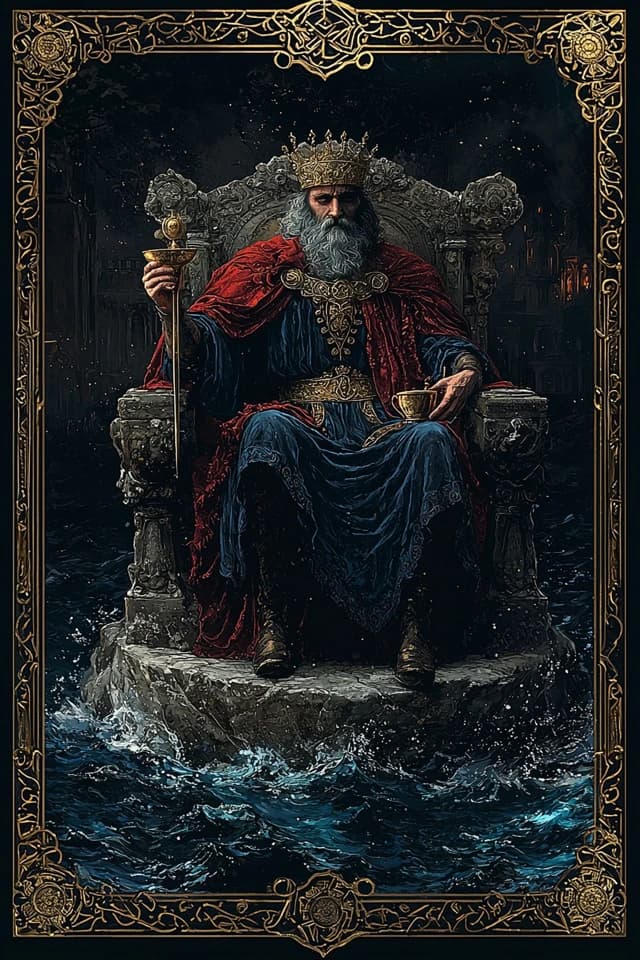
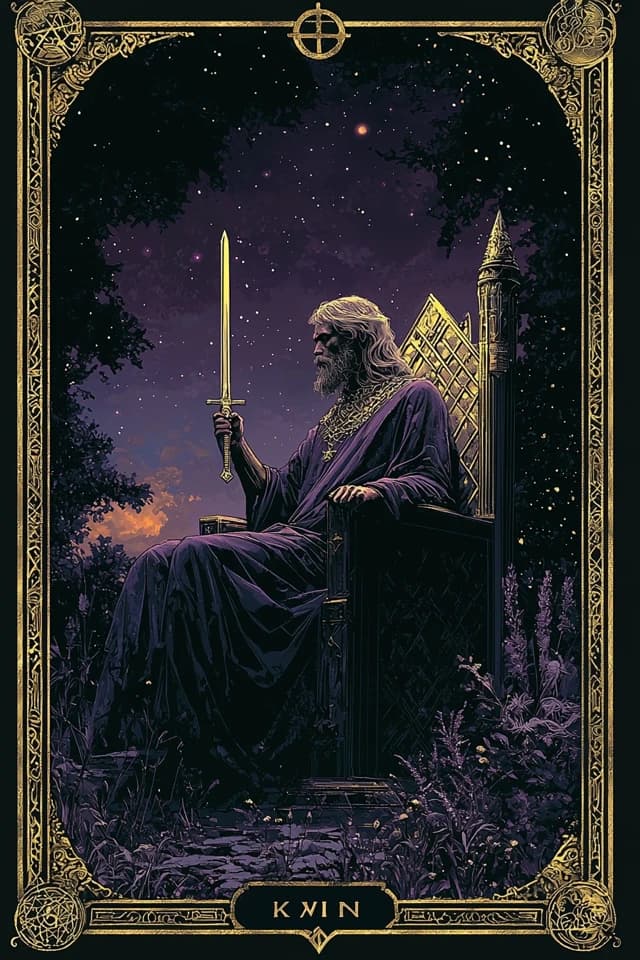
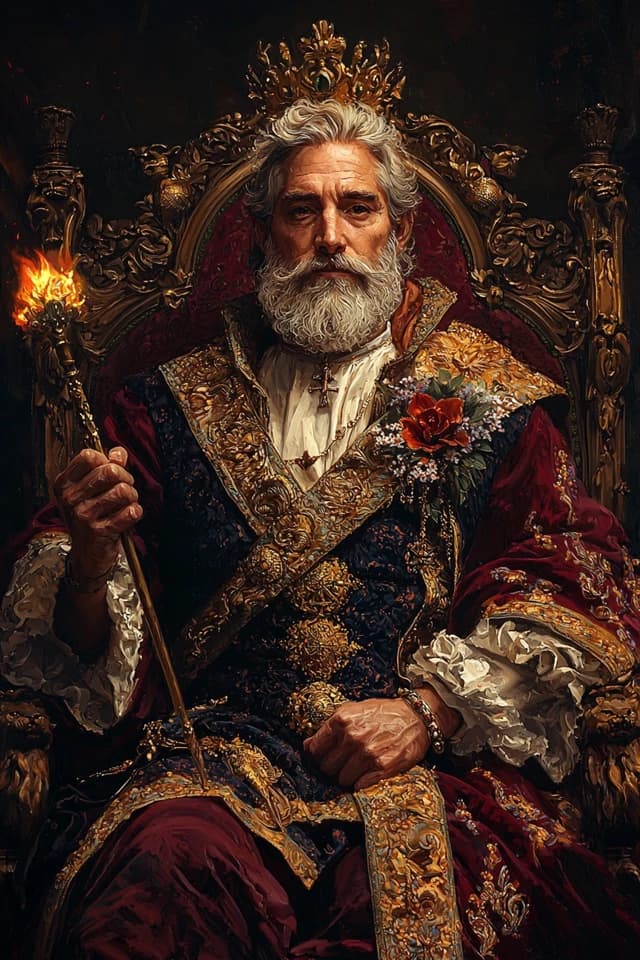
Same element — Water

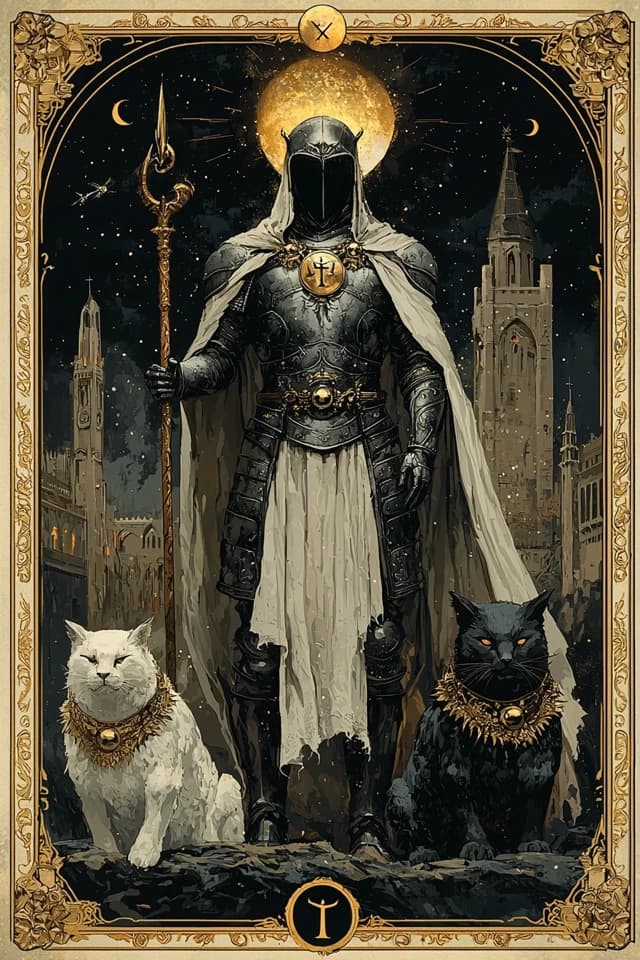
More from the Major Arcana

The Fool's journey
Popular Combinations with Death
See how Death interacts with other major arcana cards in a reading.

Death with Minor Arcana
How Death interacts with Aces, court cards and key pip cards in a reading.