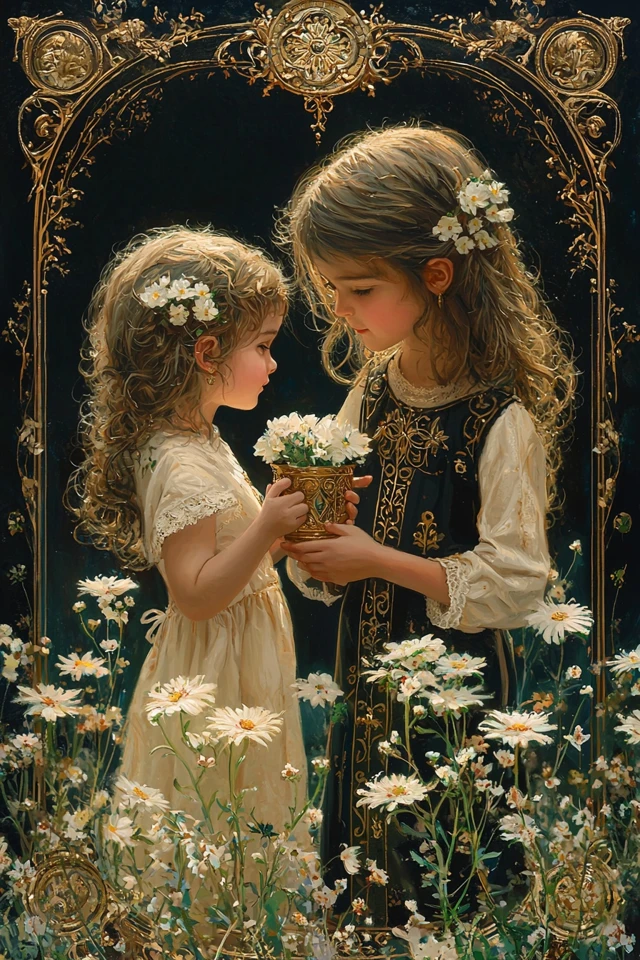
Six of Cups
Six of Cups says yes — nostalgia, reunion and the sweetness of the past are supporting you now.
Upright Meaning
The Six of Cups brings a warm wave of nostalgia and the sweetness of cherished memories. A reunion, a return to a familiar place or an act of genuine kindness is indicated. Innocence and goodwill surround you.
The Six of Cups occupies a tender and sometimes complex space in the emotional landscape: the territory of memory, nostalgia, and the past's continued presence in the present. The traditional image of a child offering flowers to a smaller child in a golden village scene carries a warmth that is genuine — there is something real and valuable about reconnecting with the innocence, spontaneity, and pure feeling of earlier life. In psychological terms, this card speaks to the inner child: the part of the self that carries both the joys and the wounds of early experience. When the Six of Cups appears in an upright position, it often signals that the past has something to offer the present — a quality of openness, creativity, or wonder that has been overlaid by adult seriousness. It can also represent literal reconnection: people, places, or feelings from the past returning in a form that enriches the present rather than complicating it.
Reversed Meaning
Full Reversed Page →You may be stuck in nostalgia or refusing to grow beyond the past. It is time to take the best of your history forward.
Reversed, the Six of Cups raises questions about the relationship between past and present that become more uncomfortable. Nostalgia, which in its healthy form reminds us of what matters, can in excess become a flight from the present — a preference for idealised memory over the complexity of what is actually happening now. The reversal may point to a pattern of living in retrospect: measuring the present by the past, grieving a lost golden age, or holding onto relationships and identities that have outgrown their usefulness. There is also a shadow dimension related to childhood: wounds from early experience that have not been examined, patterns inherited from family systems that continue to operate beneath awareness, or an unmet need for nurturing that colours adult relationships. The reversed Six asks whether the past is informing your present in healthy ways or whether it is obscuring your view of what is actually available to you now.
A reunion with a past love, a childhood sweetheart resurfacing or a relationship filled with genuine sweetness.
Returning to a previous employer, a mentorship from the past or work with children or community.
Healing the inner child. Past lives and ancestral patterns may be relevant to your current path.
Six of Cups in Love — Full Meaning
The Six of Cups upright in love is one of the deck's signature nostalgia cards. Two figures, often depicted as children, exchange cups of flowers in a sun-warmed scene of innocence and gentle generosity. When the card appears in a love reading, it speaks to a return — sometimes literally, of someone from your past, and sometimes metaphorically, of a quality of love that had become unfamiliar in adult life: open-hearted, uncalculating, freely given.
This is the classic ex-returning card in many tarot traditions, and that reading is often accurate. A former partner may resurface, often a first love or an early significant relationship. Whether reconnection is wise depends on what has actually changed since the original parting — the card itself is neutral on that question, only noting that the door of contact is open. For some, it describes the rekindling of a meaningful childhood or adolescent friendship that gradually deepens into something more. For others, it points to meeting someone new who carries the same quality of safety and ease you associated with younger love.
Within established partnerships, the Six of Cups marks a return of tenderness — a remembering of who you were when you first met, a softening of the harder protective layers that long-term coupling can accumulate. It can also describe shared family life with children, or the way your partner becomes the keeper of your earliest tender history. The shadow of this card is living too much in the past, romanticising old relationships, or letting nostalgia substitute for present engagement. In the upright position, however, the dominant note is gentle and good. Love is being offered freely, in the spirit it had before life taught you to be careful.
In love, the reversed Six of Cups may indicate that past relationships or childhood patterns are casting a long shadow over present ones. You may be unconsciously seeking to recreate an early attachment dynamic — for better or worse — rather than seeing your current partner clearly. An ex re-entering your life may bring more complication than comfort. The invitation is to notice where nostalgia is functioning as avoidance of present-day intimacy.
Professionally, this reversal can point to a reluctance to move forward in your career because the past feels safer or more known. You may be clinging to a role, a way of working, or a professional identity that no longer fits — because letting it go feels like losing something precious. Alternatively, patterns from early professional experiences (including family attitudes toward work and success) may be limiting what you allow yourself to pursue or achieve.
Spiritually, the reversed Six of Cups invites examination of inherited religious or spiritual frameworks. The faith of your childhood — whether it was nourishing or damaging — continues to exert influence even when consciously rejected. This card asks whether you have genuinely examined your spiritual foundations or whether you are either uncritically repeating them or reactively fleeing from them. A more conscious relationship with your spiritual inheritance is possible.
Frequently Asked Questions
The Six of Cups represents the past, memory, nostalgia, and the influence of childhood experience on the present. It is generally a warm card — one that speaks to genuine innocence, the nourishment of sweet memories, and the possibility of reconnection with something or someone from earlier in life. At a psychological level it points to the inner child: the part of yourself that retains the capacity for wonder, spontaneity, and pure feeling. In readings it may signal that something from your past is relevant to your present situation, or that qualities you had as a child — openness, creativity, trust — are needed now.
The Six of Cups is a mild yes, particularly for questions related to the past, reunion, childhood connections, and anything involving creative innocence or simple pleasure. Its energy is gentle and nostalgic rather than forceful. If you are asking whether to reconnect with someone from the past or revisit something from an earlier chapter of your life, this card is broadly encouraging. Reversed, it becomes more cautious — suggesting that while the impulse toward the past is understandable, there may be a tendency to idealise what was rather than engage honestly with what is.
In love, the Six of Cups most frequently points to either the return of a past relationship or the influence of the past on a current one. An ex may re-enter your life — or feelings for someone from your past resurface. The card encourages a clear-eyed examination of whether this represents genuine growth and a second chance, or whether nostalgia is repainting old difficulties in flattering light. It can also describe a relationship with a particularly comfortable, familiar quality — the feeling of having known someone before, or of being accepted for who you fundamentally are rather than a curated version of yourself.
The Six of Cups in love speaks to nostalgia, innocence, and a return of soft-hearted connection. It often describes the resurfacing of someone from your past — a former partner, an old friend whose feelings have shifted, a first love — or the arrival of new connection that carries the same quality of safety as younger love did. For couples, the card marks a renewal of tenderness, a return to the unguarded version of yourselves you were when you first met. It is one of the warmer cards in the suit, asking you to receive love in the open-handed way you may have forgotten was possible.
The Six of Cups is the deck's classic ex-returning card, and that reading is often correct. Someone from your past — particularly a first love or an early significant relationship — may resurface, reach out, or step back into your life in some form. The card does not, however, tell you whether reconnection is wise. That depends entirely on what has actually changed since the original parting and whether the connection still has somewhere to go. The Six confirms the door is open. It is up to you to decide, honestly and without pure nostalgia, whether to walk back through it.
Yes, the Six of Cups frequently appears in reconciliation questions, and it is among the more hopeful signs the deck offers in that context. The card depicts an exchange of cups freely given, suggesting that the goodwill required for genuine reunion is present on both sides. What it does not depict is the conversation that must happen for reconciliation to be more than a return to the same dynamic. The card opens the door. Lasting reconciliation requires that both people walk through it as their current selves, not as the younger versions who first parted.
For an existing relationship, the Six of Cups marks a return of tenderness — a softening of the harder protective layers that long-term coupling can accumulate. You may find yourselves laughing more easily, remembering early moments together, becoming again the unguarded version of yourselves that first chose each other. The card can also point to shared family life, especially with children, or to the way a long partner becomes the keeper of your earliest history. The dominant note is gentle: love is being offered in the open-handed way you may have forgotten was possible.
Often appears with





Other 6s — the same number, a different suit


Same element — Water




More from the Cups


Popular Combinations with Six of Cups
See how Six of Cups interacts with other major arcana cards in a reading.